Deep Coma - Exploration of the LostSideDead
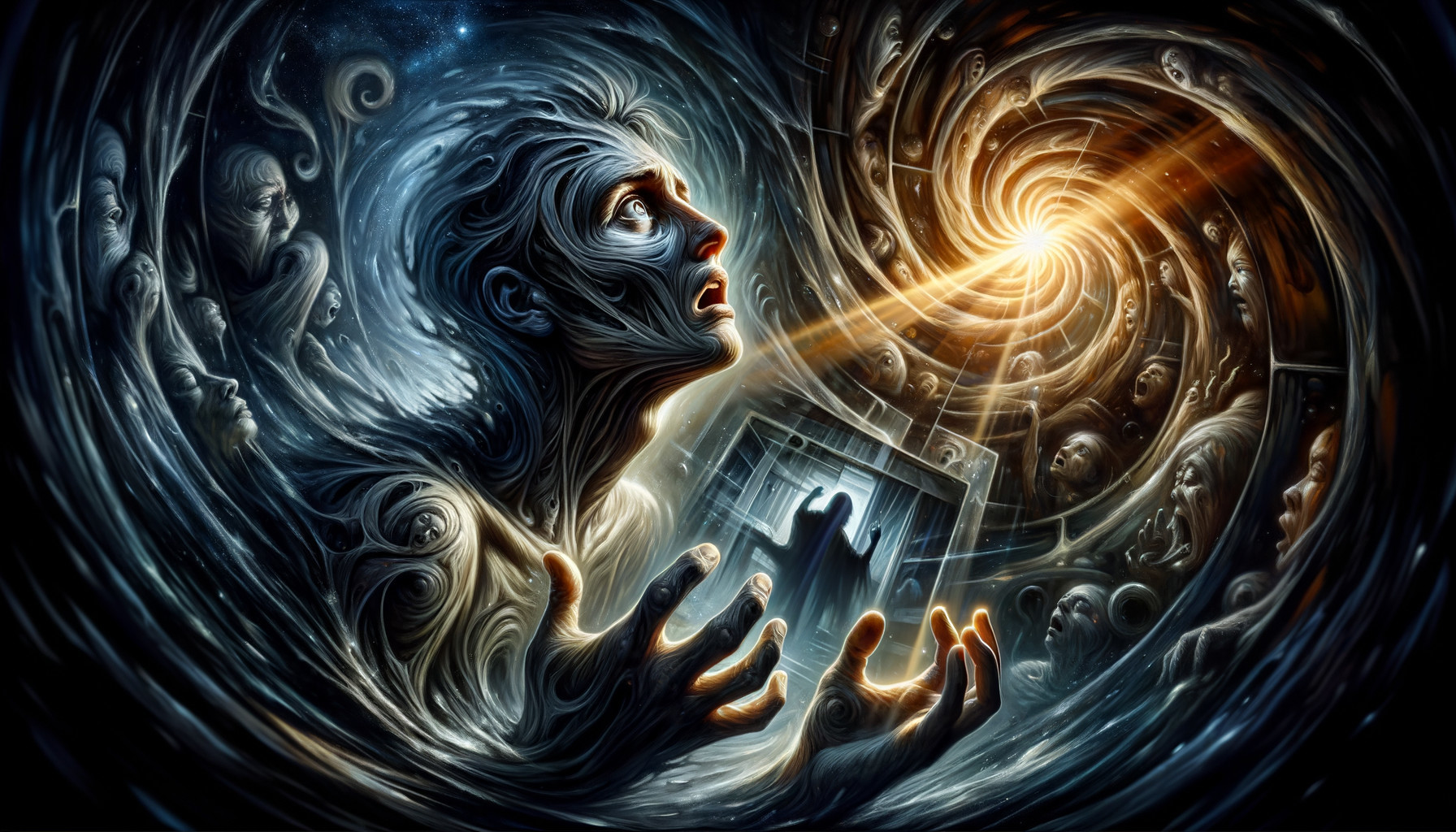
"Trapped I can barely move
My body doesn't respond
Thoughts rejected as wrong
My heart beats still but not as strong
As I move around the attention sphere
Realize I am here
Frozen in time
Bruised ego disappears
Intertwined distorted state of mind
I scream but cannot be heard
Stuck in a delusion
I move in circles chasing my breath
The rhythm of the machine my regrets
The outside cannot be seen
A twisted vision sworn in between
Broken I swim around moving up and down
Weakness drives the energy in the crown
As I begin to remember one thing comes within mind.
Powerful light guides me above the darkness and I am here."
The poem conveys a sense of entrapment and disconnection from one's surroundings, both physically and mentally. The speaker describes a state of paralysis, unable to move or respond, while feeling rejected and weak. The imagery of being trapped in a distorted reality, where the outside world is obscured and the mind is in turmoil, evokes a sense of isolation and helplessness.
From a scientific perspective, this poem can be interpreted as a metaphor for various psychological and physiological states. The feeling of being trapped and unable to move could represent a form of paralysis, such as sleep paralysis or a dissociative episode. These conditions involve a temporary loss of voluntary muscle control and may be accompanied by hallucinations or distorted perceptions of reality.
The reference to a "bruised ego" disappearing suggests a loss of self-esteem or identity, which can occur in response to trauma or stress. This could manifest as feelings of worthlessness or inadequacy, contributing to the speaker's sense of being stuck in a delusion or distorted state of mind.
The imagery of moving in circles and chasing one's breath may symbolize the struggle to regain control or find meaning in a chaotic or overwhelming situation. The "rhythm of the machine" and the mention of regrets hint at a sense of inevitability or resignation, as if the speaker is caught in a cycle of self-destructive behavior or negative thought patterns.
However, amidst the darkness and despair, there is a glimmer of hope represented by the "powerful light" that guides the speaker above the darkness. This could symbolize a moment of clarity or realization, where the speaker finds strength or purpose to overcome their struggles and emerge from the darkness.
Overall, the poem captures the complexities of human emotion and experience, exploring themes of isolation, vulnerability, and resilience in the face of adversity. It offers a poignant reflection on the challenges of navigating internal and external obstacles, while also highlighting the potential for growth and transformation in the midst of hardship.
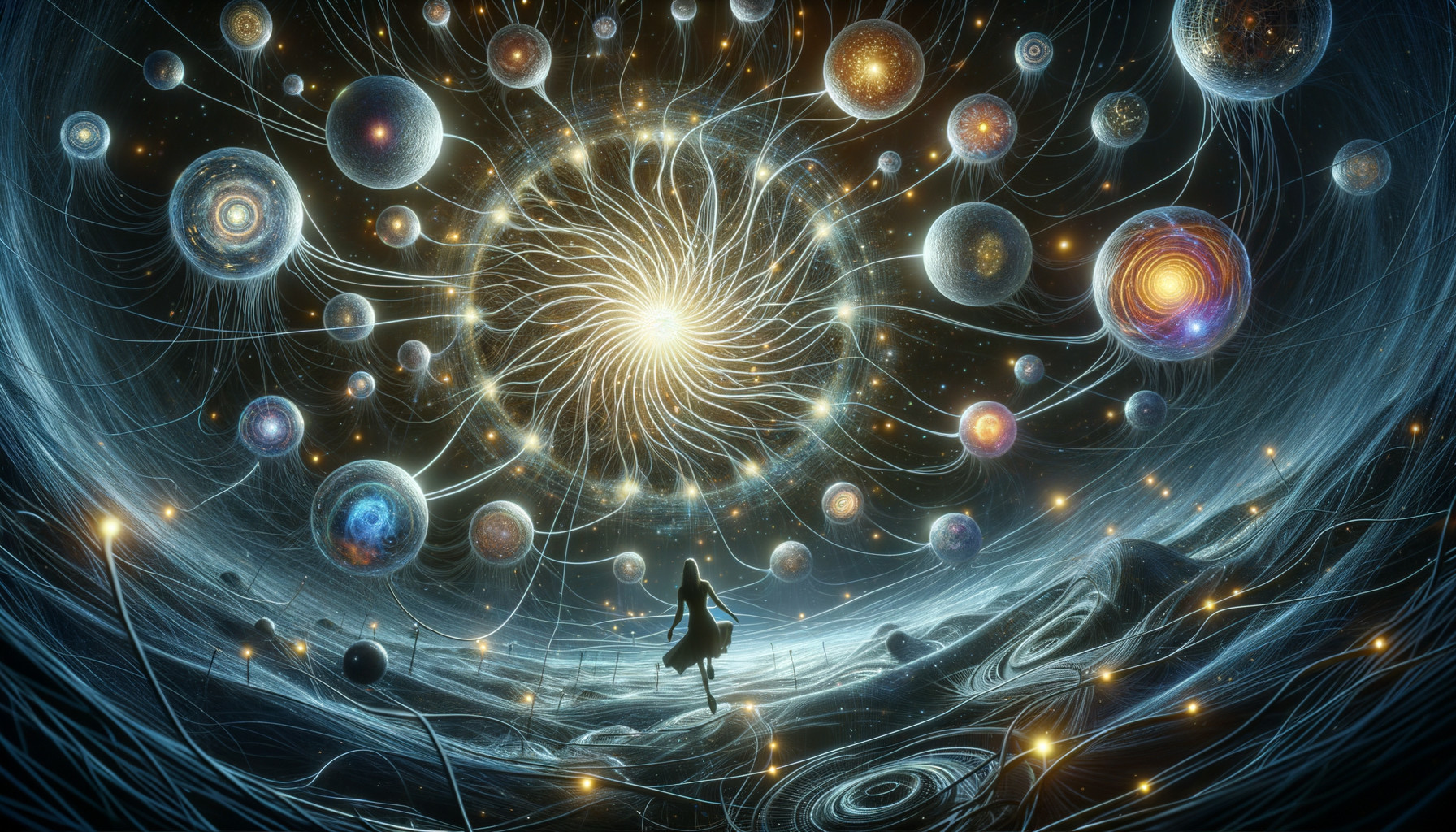
"The infinite ocean of memories is all preserved and able to be experienced from different perspectives. Controlled by an unknown force, I can only describe as a cyclone of energy holding everything together. I was moving through this ocean, jumping from memory to memory, gaining knowledge from each encounter with the life forms stored in each memory, unable to change anything but my own understanding of the interpretation of the experience. moved in circles unable to escape."
In scientific terms, the concept described can be analogized to the neural networks and memory systems of the brain. The "infinite ocean of memories" represents the vast repository of stored information within the brain's neural networks, encompassing experiences, perceptions, and learned knowledge accumulated over a lifetime.
From a neuroscientific perspective, memories are encoded and stored as patterns of neuronal activity within interconnected networks of neurons distributed throughout the brain. These memories can be accessed and experienced from different perspectives through processes such as recall and associative retrieval.
The notion of being "controlled by an unknown force" can be likened to the underlying mechanisms of memory formation, consolidation, and retrieval, which are governed by complex neurobiological processes. These processes involve various molecular, cellular, and synaptic mechanisms that regulate the encoding, storage, and retrieval of memories.
The metaphor of a "cyclone of energy holding everything together" suggests the dynamic and interconnected nature of neural networks and memory systems. In the brain, memories are not static entities but are continuously being modified, updated, and integrated into existing networks through processes such as synaptic plasticity and neurogenesis.
The experience of "moving through this ocean, jumping from memory to memory" reflects the fluid and associative nature of memory retrieval, where related memories can be triggered and accessed through associative networks. Each encounter with a memory involves the activation of specific neuronal ensembles corresponding to that memory, leading to the re-experiencing of past events or knowledge.
The notion of "gaining knowledge from each encounter with the life forms stored in each memory" underscores the role of memory in learning and cognition. Memories serve as repositories of past experiences and knowledge, which inform our understanding of the world and shape our behavior and decision-making.
The experience of "moving in circles unable to escape" may symbolize the phenomenon of rumination or repetitive thought patterns, where individuals may find themselves trapped in cycles of re-living past experiences or dwelling on unresolved issues. This can be attributed to the inherent associative nature of memory networks, where related memories can trigger each other in a recursive manner, leading to repetitive patterns of thought and behavior."
What I learned from being on the other side while in a deep coma.
Upon scrutinizing the fundamental substrate vested within me, I observe an eternal radiance diffusing across the neural networks of cognition. With each inhalation, a manifestation of mentation unveils, initiating a sequential progression of cognitive computations. This iterative deliberation perpetuates an unbounded continuum of experiential phenomena."
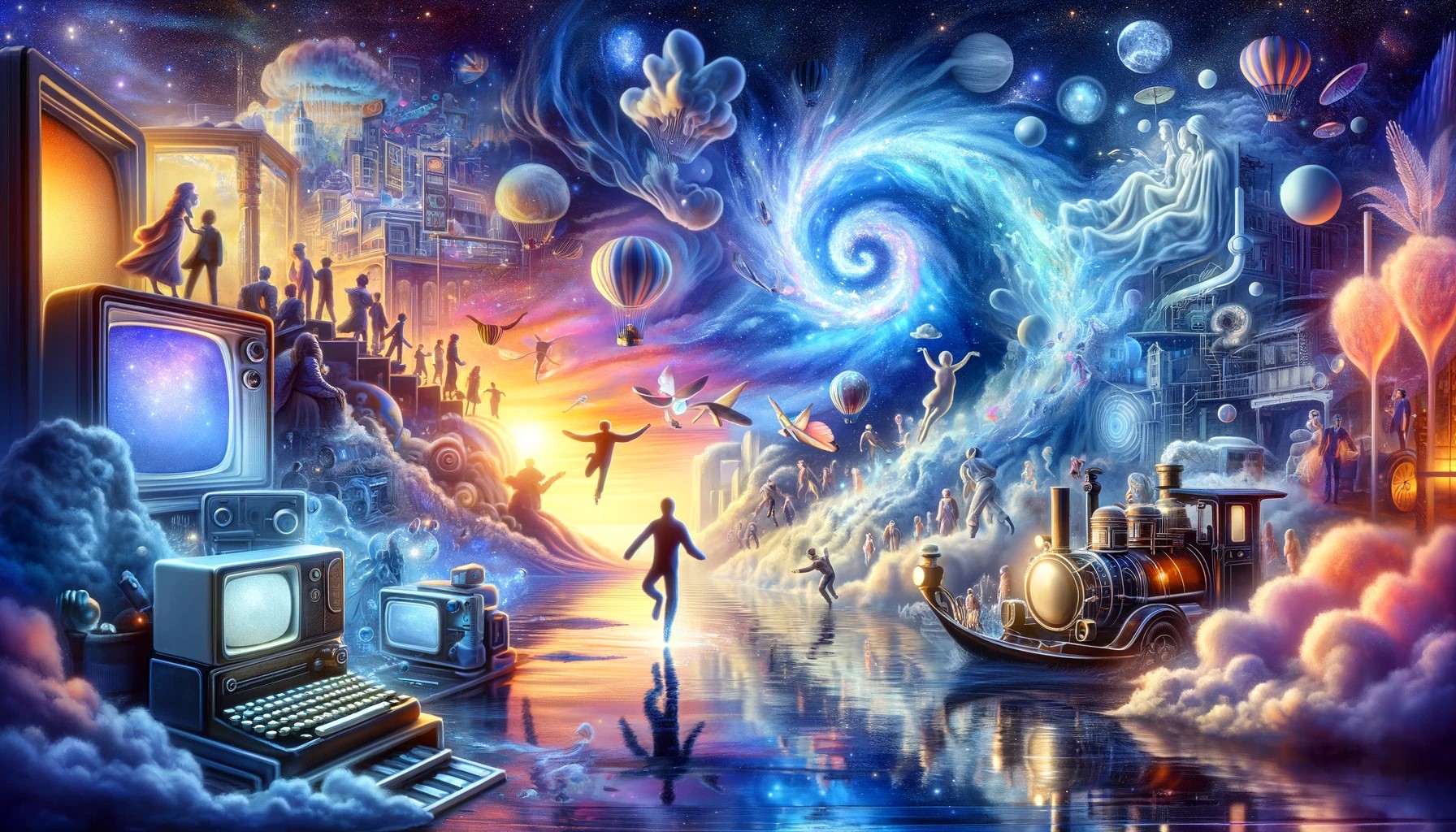
Here is some information about the dreams I experienced while in the coma.
As I journeyed through the depths of unconsciousness, it was as if I were enveloped by a vortex, a symbolic gathering of experiences embodying both the positive and negative aspects of life. This vortex carried me toward a realm of safety and introspection, illustrating the mind's complex way of navigating through the vast expanse of human emotion and memory during periods of deep unconsciousness.
Within this mental odyssey, my dreams wove together narratives that spanned the whimsical to the reflective. I envisioned scenarios ranging from the adventures of an anthropomorphic squirrel in literature or television, to early computers whimsically simulating Mickey Mouse ice skating, each dream blending elements of culture, technology, and personal meaning.
One particularly vivid dream cast me in a bygone era, the 1950s, where I spent time with siblings I've never known in reality. They possessed a camera that paradoxically merged digital and analog technology, capturing our moments in monochrome metaphor for my brain's exploration of time, memory, and the juxtaposition of past and future.
In a space where souls congregated, my consciousness drifted freely, akin to floating on the ocean's currents. This symbolized a collective unconsciousness, a shared realm where individual identities merge and consciousness explores the very essence of existence.
My dreams also delved into personal and relational dynamics, such as an imagined family life with a child I was absent from. This narrative thread reflected deep-seated emotions and the complexities of human relationships, including the impact of technology, depicted by the child's toys causing digital chaos, and societal changes on personal connections.
I found myself dreaming of starting a progressive television station in England, a venture that faced market apathy. This dream, along with encountering a steamboat captain reminiscent of a divisive public figure, underscored my subconscious engagement with societal and political themes, reflecting a contemplation of identity, purpose, and the struggle for progress in a changing world.
The presence of a horror icon, Robert Englund, proposing a collaborative online game, juxtaposed with his role in a controversial late-night show, highlighted the interplay between popular culture, personal aspirations, and societal critique.
As my dream journey culminated, I experienced a virtual reality that spun faster and faster until I broke through to another level of consciousness. This sensation represented the mind's potential to transcend the limitations of the physical and digital worlds, exploring the boundaries of reality and perception.
These vivid, surreal narratives were the most profound thoughts I've ever encountered, making perfect sense within the dream world yet challenging to articulate in the English language. They represent the brain's remarkable ability to process emotions, memories, and societal influences, weaving them into a rich tapestry that explores the depths of human consciousness and the intricacies of the subconscious mind.